
In the world of building design and construction, airtightness has become a pillar of building durability, occupant comfort, and energy efficiency.
As building codes evolve, such as the 2024 IECC, Whole Building Airtightness Testing (WBAT) is moving from an optional best practice to a mandatory practice for many projects. However, beyond just meeting code requirements, WBAT offers building owners and developers quantitative proof that they are getting the performance they paid for.
We sat down with Terrance Dumoulin, a building enclosure professional at LeMessurier, to discuss why WBAT is becoming an essential tool for both new construction and deep energy retrofits to existing buildings.
Q: Why should a building owner consider WBAT a priority, beyond just meeting code?
Terrance Dumoulin: It really comes down to verifying your investment. You can spend a significant amount of money on a high-performance design, but WBAT is the most complete way to confirm that the design on paper translates into physical construction.
 Think of it as the ultimate quality control. It tests the entire air barrier system as a whole, rather than just isolated components. For an owner, this means lower energy costs, better moisture control, and the peace of mind that the building envelope is performing at its peak before the keys are handed over.
Q: How does WBAT differ from the standard enclosure tests we’ve been doing for decades?
Terrance Dumoulin: For years, the industry has relied on isolated tests, such as water-chamber testing, sealant pull tests, or bubble tests on specific penetrations. These are great for checking individual assemblies, but they don’t tell you how the whole system works together.
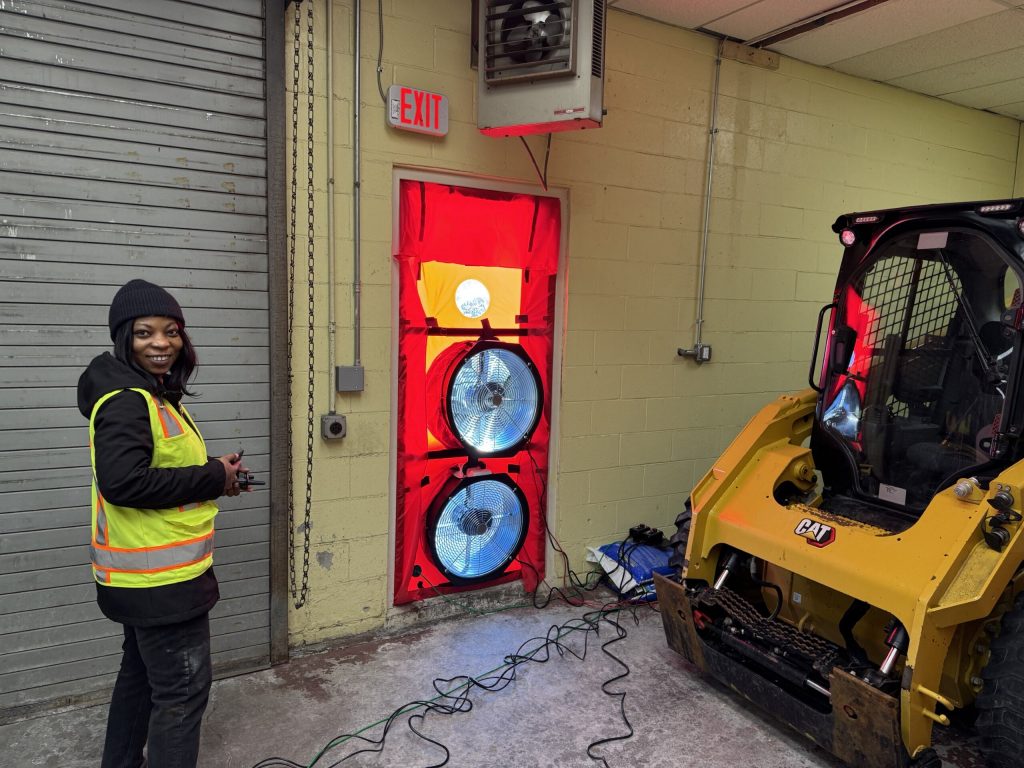
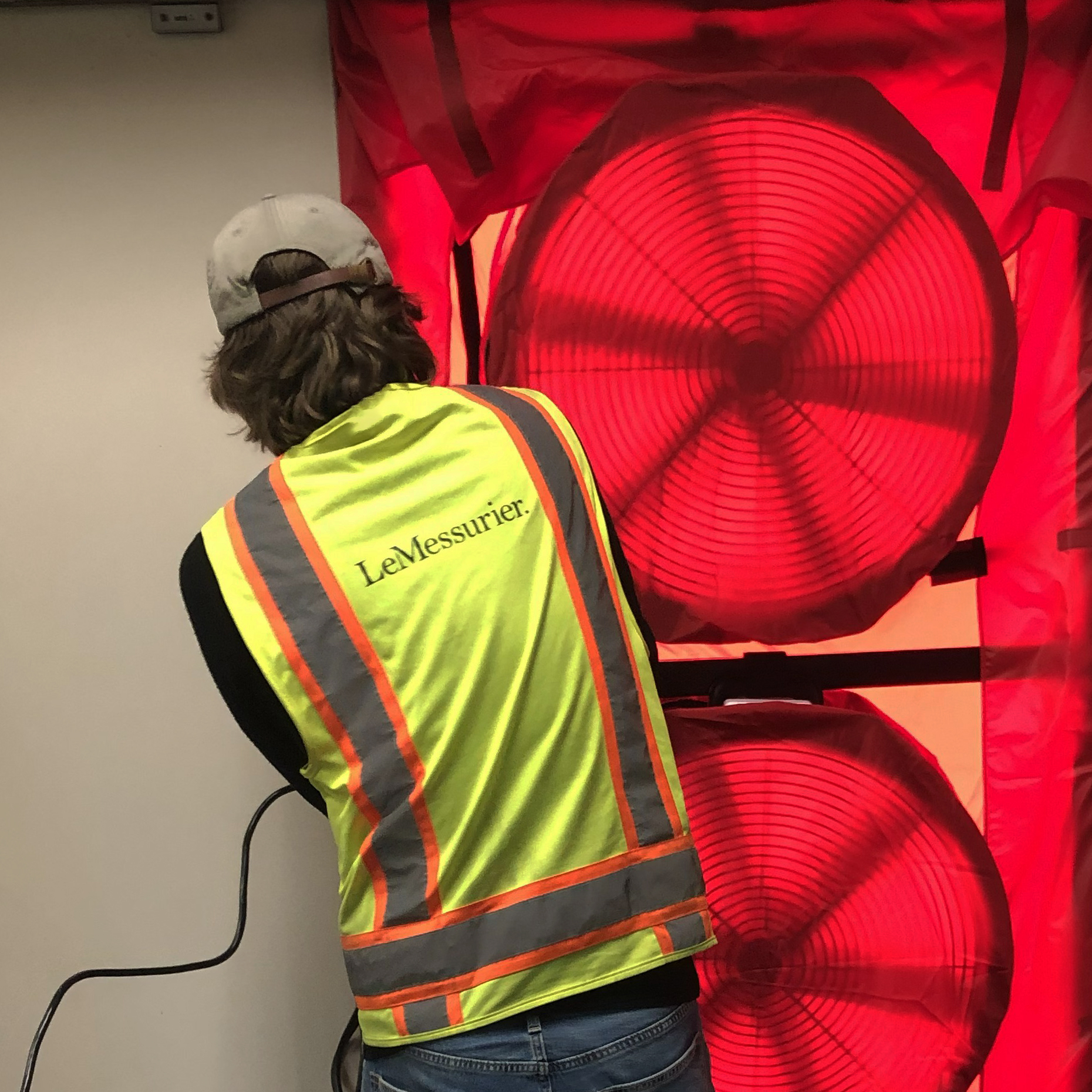
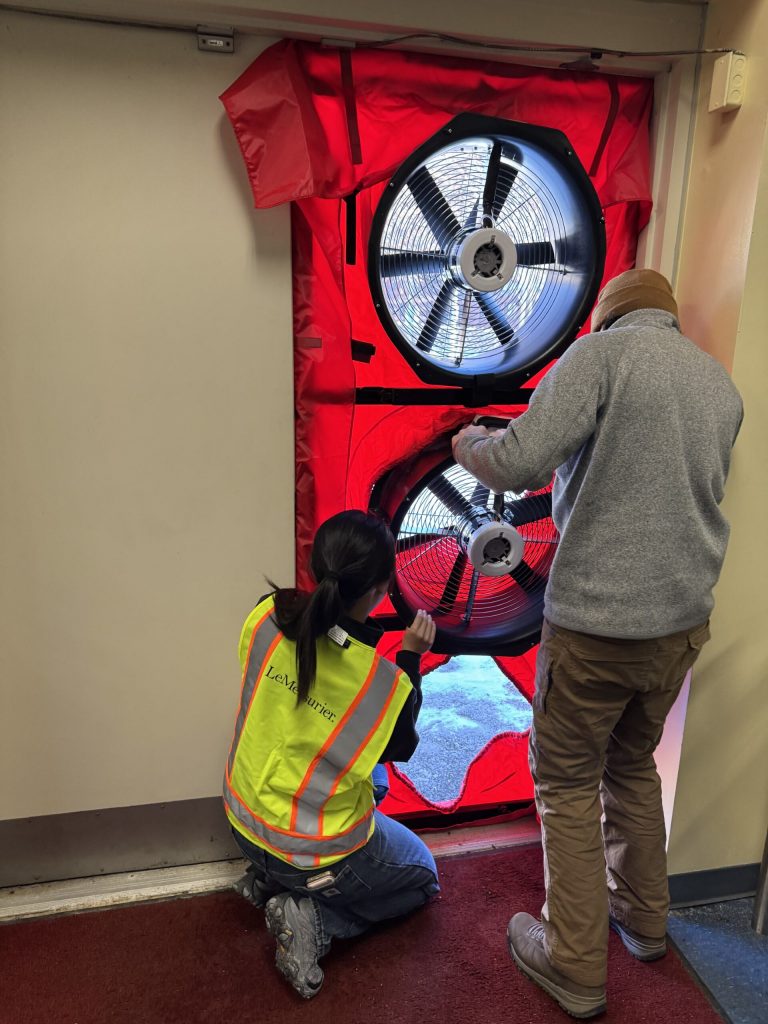
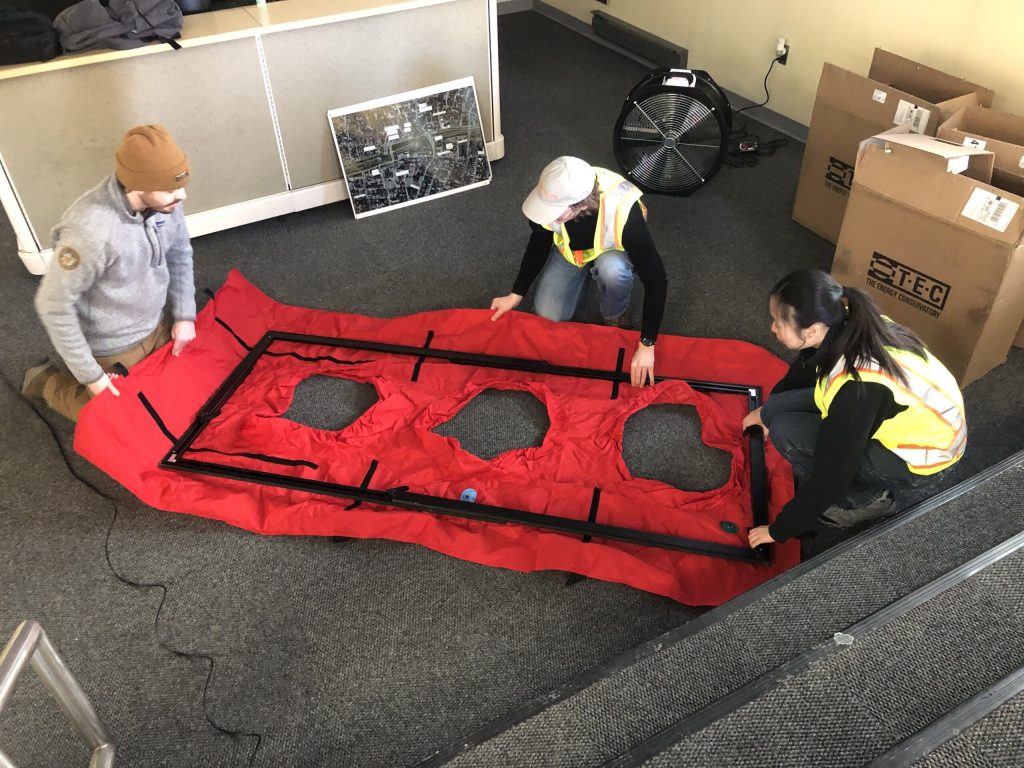
WBAT is the next step forward. It uses large blower door fans to depressurize or pressurize the entire building, allowing us to provide a quantitative leakage rate per square foot of the enclosure. It captures the nooks and crannies that isolated tests miss, like foundation detailing or complex roof-to-wall transitions.
Q: You’ve mentioned that WBAT is particularly valuable for existing buildings. Can you explain why?
Terrance Dumoulin: Absolutely. For existing buildings, WBAT is a powerful diagnostic tool. If you’re planning a deep energy retrofit on an existing building, doing a test before you start allows you to understand baseline performance and see exactly where the leaks are.
 Instead of guessing and replacing everything, WBAT can act as a findings report. It might show that your windows are actually in great shape, but your parapets are leaking air like a sieve. This allows owners to take a targeted, cost-effective approach to renovations rather than a blanket fix.
Q: Some clients might see WBAT as an additional expense. How do you address that?
Terrance Dumoulin: It is a comprehensive test that requires specialized equipment and time, so there is an associated cost. But you have to weigh that against the cost of a building that underperforms for 30 years.
Air leakage is one of the primary drivers of energy waste and moisture-related damage in buildings. By identifying and fixing these issues during construction or before a retrofit, you avoid the much higher costs of future repairs and high utility bills. It’s about moving from a qualitative “we think this works” to a quantitative “we know this works”.
Q: How does LeMessurier integrate WBAT into its broader enclosure services?
Terrance Dumoulin: We view WBAT as a natural extension of our existing diagnostic capabilities. We’ve always used tools like infrared cameras to find leaks, but WBAT takes it further. Now, we don’t just show you a picture of a leak; we give you a hard data point on your building’s performance.
By combining WBAT with our decades of experience in enclosure design, diagnostics, and construction testing, we help our clients navigate new code requirements while ensuring their buildings, big or small, are as durable and efficient as possible.